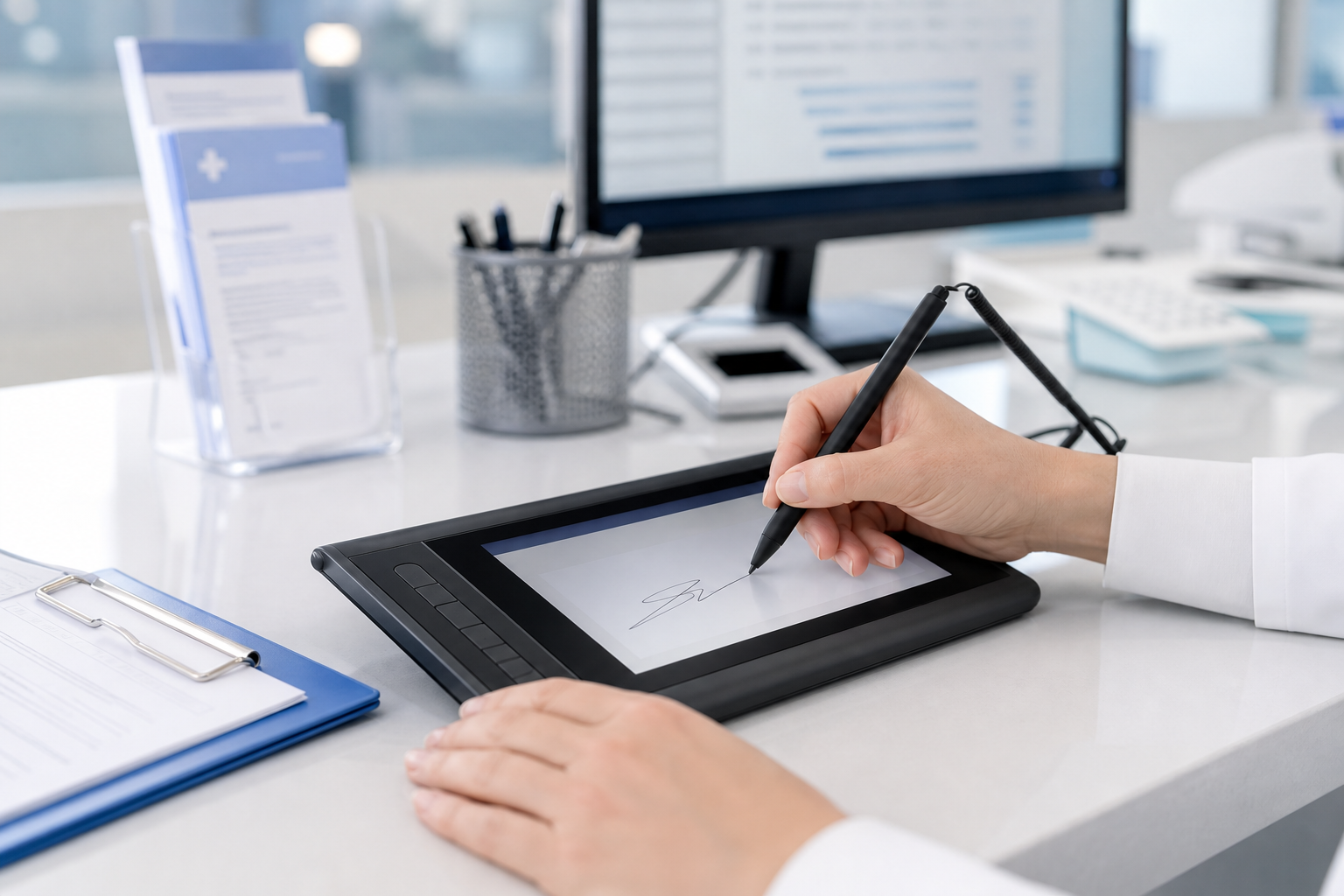
How Electronic Signature Pads Improve Paperless Hospital Operations
Hospitals process a large number of documents every day. Patient registration forms, treatment consent forms, surgery notices, laboratory applications, insurance confirmations, payment records and discharge document s all require accurate signatures. If these steps still rely on paper, staff must print documents, guide patients to sign, scan the signed pages, upload files and store paper archives. This takes time and creates extra work for the front desk, nurses, doctors and medical records departments. For hospitals that want to build a cleaner and faster paperless office, an electronic signature pad is a practical tool at every service counter.
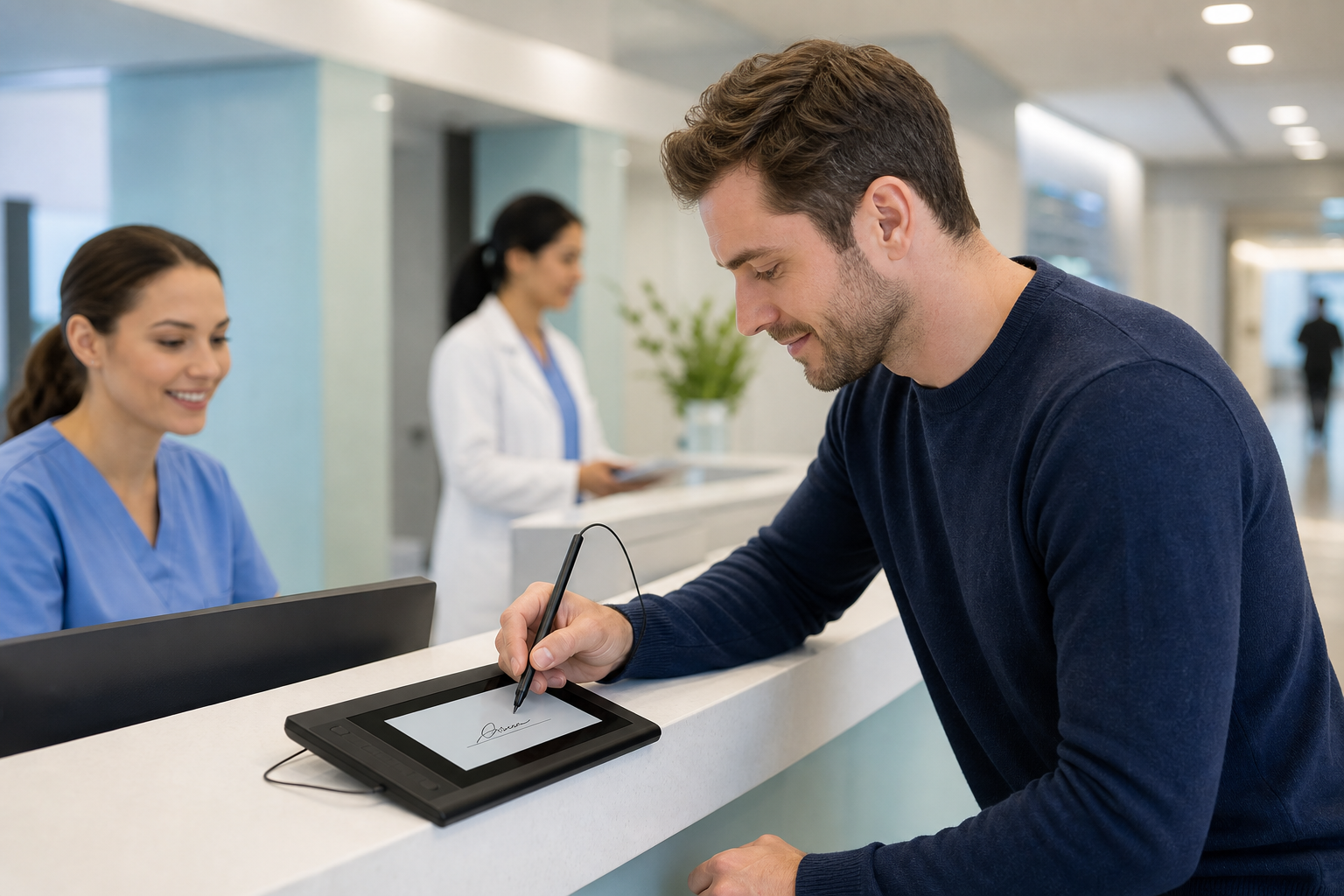
The value of a signature pad is simple: it keeps the signing step inside the digital workflow. Instead of printing a form only because a patient needs to sign it, hospital staff can display the document in the system, ask the patient to sign on the device, and save the signature directly with the electronic file. This helps registration desks, outpatient clinics, pharmacy counters, laboratory windows and inpatient admission offices reduce repeated printing and scanning. It also makes the entire process easier to trace, because the signed record can be connected with time, operator and patient information in the hospital information system.
For patients, paperless signing creates a smoother experience. A patient arriving at a hospital may already feel worried or rushed. Asking them to sign multiple paper forms can make the visit feel slower and more complicated. With a signature pad, the patient signs naturally with a stylus, much like writing with a pen, while the hospital keeps the record in digital form. This is especially helpful for common workflows such as outpatient registration, informed consent, examination confirmation, payment authorization and discharge acknowledgement.
Hospitals also benefit from better document management. Paper documents can be lost, damaged, misfiled or scanned unclearly. Digital signature records are easier to store, search and retrieve. When a department needs to review a previous consent form or service confirmation, staff can find the document in the system instead of searching through physical folders. A reliable electronic signature pad therefore supports both service efficiency and medical record accuracy.
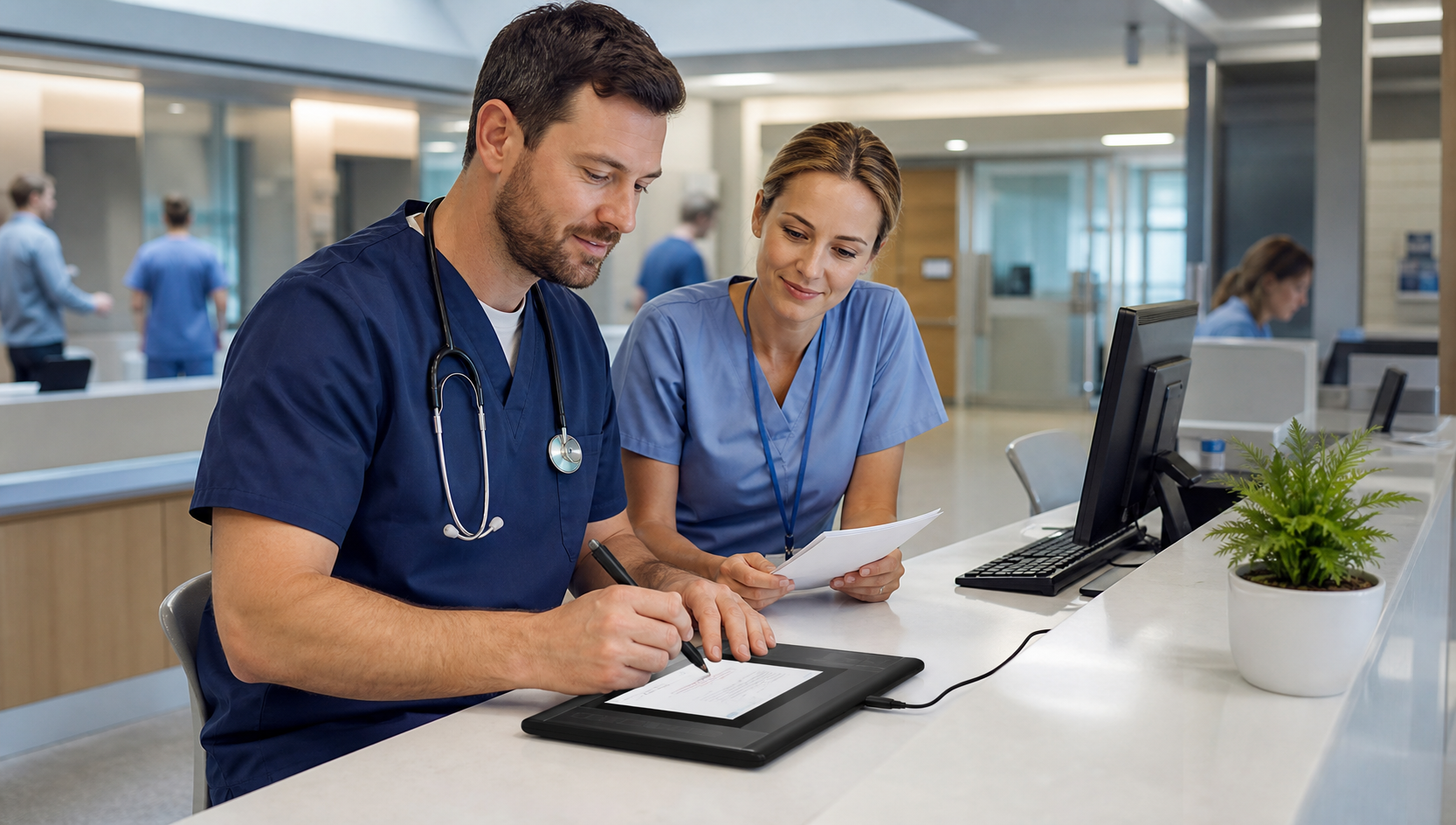
Paperless workflows can also reduce daily operating costs. Hospitals use large amounts of paper, ink and printer maintenance resources. They also need space for storing files and staff time for document sorting. By replacing repeated paper signatures with electronic signatures, hospitals can reduce these costs while keeping service areas cleaner and more organized. This is important in medical environments, where hygiene, order and speed all influence the patient experience.
Another advantage is cross-department collaboration. A signed electronic document can move from the registration desk to the clinical department, finance office or archive system without being physically carried or scanned again. This supports faster approval and reduces the chance of missing information. In a busy hospital, even small improvements at each signing point can save significant time over thousands of patient interactions.
When choosing a device, hospitals should pay attention to writing accuracy, screen clarity, durability, easy cleaning, software compatibility and stable performance during high-frequency use. The device should be simple enough for patients to understand quickly and strong enough for daily hospital service. A professional electronic signature pad can become a small but important connection between digital hospital systems and real patient service.
Paperless hospital operation is not achieved by one device alone. It depends on digital systems, standardized processes and staff cooperation. However, the signature pad solves one of the most common breakpoints in digital service: the handwritten signature. By digitizing this step, hospitals can improve service speed, reduce paper handling, strengthen record management and create a more modern healthcare experience.