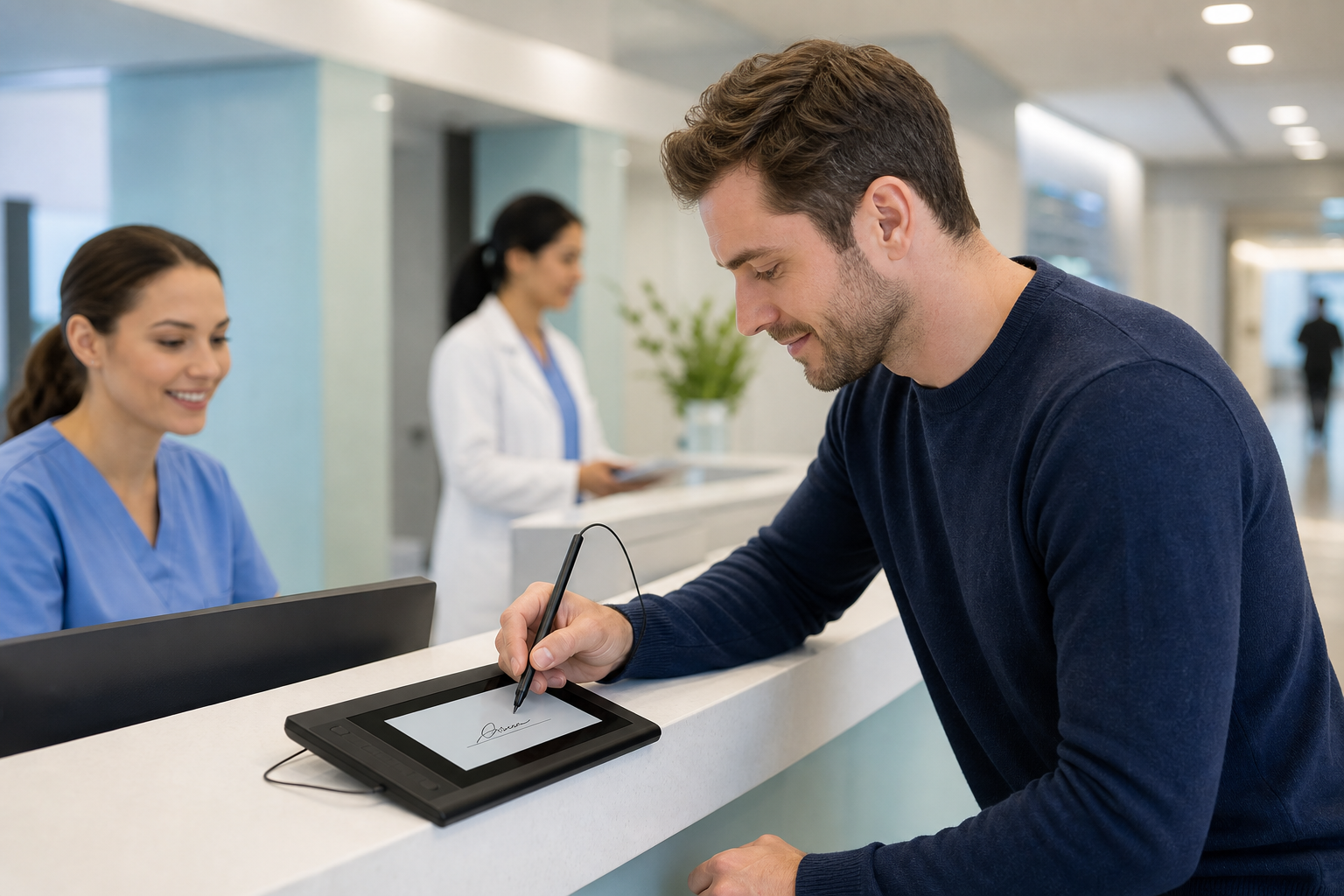
How Electronic Signature Pads Help Medical Institutions Build a Paperless Office
Paperless office is no longer only a technology trend in healthcare. For hospitals, clinics, diagnostic centers, pharmacies and public health service providers, it is becoming an important way to improve service speed, reduce administrative pressure and create a cleaner, more reliable patient experience. In this digital transformation, an electronic signature pad plays a very practical role at the service counter, registration desk, pharmacy window, insurance desk and inpatient admission area.
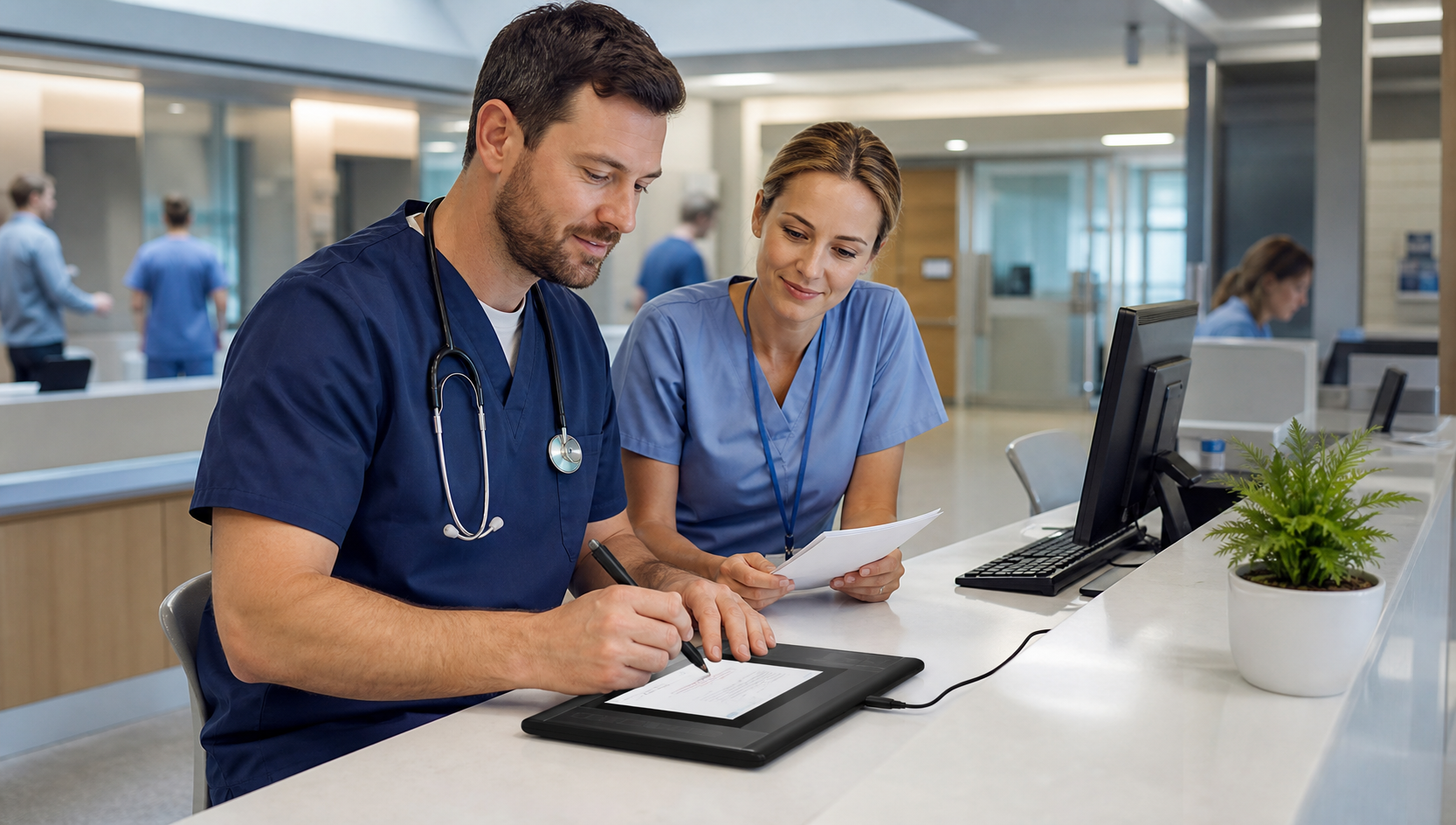
In traditional medical workflows, patients often need to sign printed registration forms, consent documents, billing confirmations, insurance statements, privacy notices and discharge records. After signing, staff must collect the paper, scan it, upload it to the system, name the file, archive it and sometimes keep the original copy. This process looks simple, but it creates hidden costs every day: paper consumption, printing time, manual filing, scanning errors, repeated data entry and storage pressure. When patient volume is high, these small steps can slow down the entire front-desk workflow.
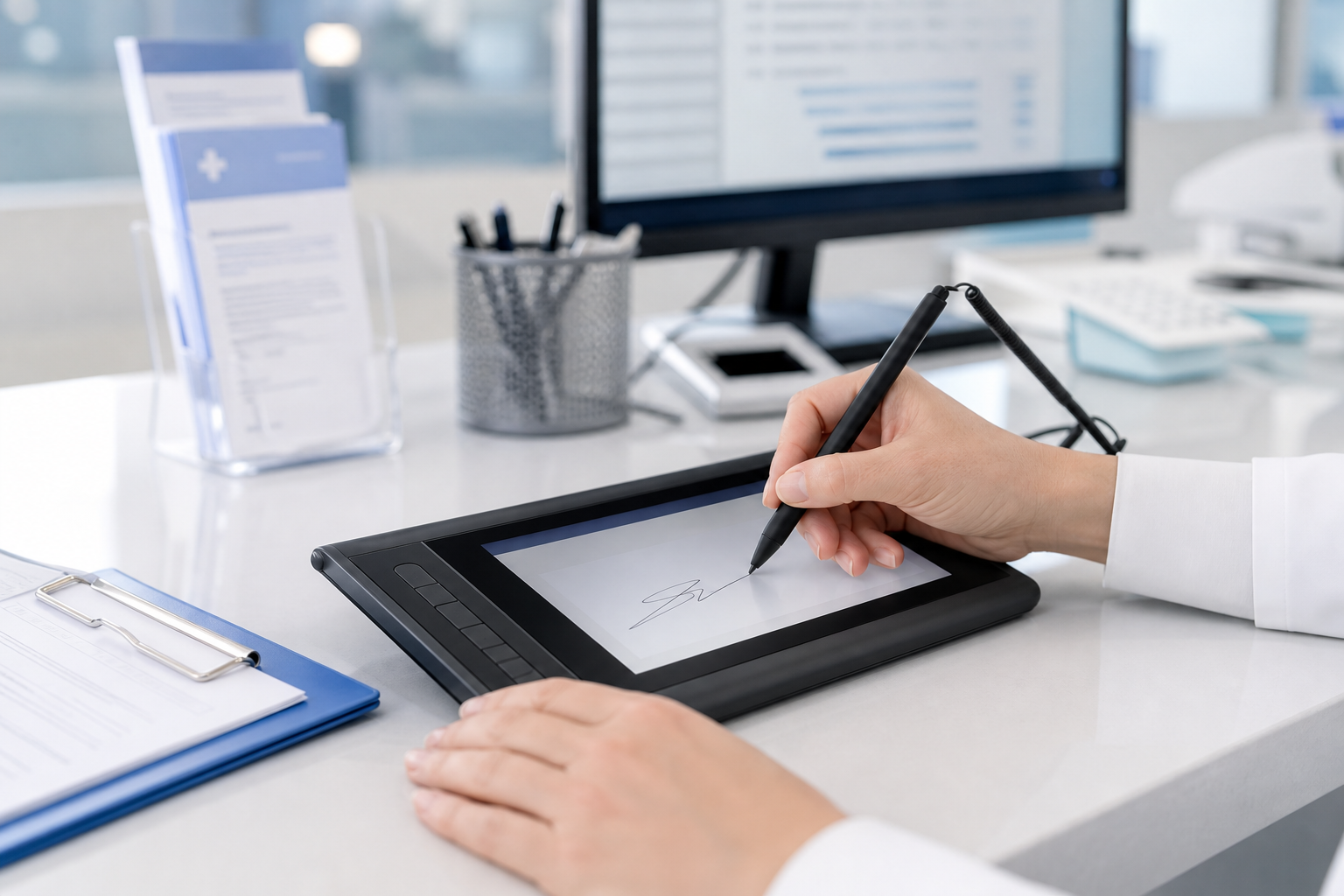
An electronic signature pad helps medical institutions turn the final “signature” step into a digital action. Patients can read the document on the service screen or staff system, sign directly on the pad with a stylus, and the signature can be attached to the digital file immediately. The signed record can then be stored together with the patient’s electronic document, making it easier for staff to search, review and manage later. This is especially useful for outpatient registration, informed consent, laboratory testing applications, telemedicine confirmation and payment authorization.
Many government healthcare systems have already moved in this direction. For example, the U.S. Department of Veterans Affairs lists pDoc Signer in its Technical Reference Model and describes the application as a tool for securely signing PDF documents with signatures written on an ePad electronic signature pad connected to a PC. This official case shows how signature pad technology can support secure digital document signing in a healthcare-related government environment. It also reflects a wider industry trend: medical documents are moving away from paper and toward traceable electronic records.
Another useful public-sector example comes from the State of Hawaii’s official eSign service. Hawaii explains that its statewide electronic signature service is used by government departments to reduce paper-based processes, support remote or in-person signing and improve environmental outcomes. Although this is a government-wide service rather than a hospital-only case, its value is very relevant to medical institutions. Healthcare service desks also need faster document approval, less printing and more flexible signing methods for patients, staff and administrators.
For patients, the biggest advantage is convenience. A patient does not need to sign multiple sheets of paper or wait while staff print and scan forms. The signing experience is natural: hold a pen-like stylus, sign on the screen and continue with the next step. For older patients or first-time visitors, this process is easier to understand than complicated online forms. A well-designed electronic signature pad can provide a familiar handwriting experience while still supporting a fully digital workflow behind the scenes.
For healthcare staff, the benefit is efficiency. Front-desk employees can process patient documents faster and reduce repetitive administrative work. Medical records departments can avoid piles of paper files and improve document traceability. Managers can reduce paper, toner, printer maintenance and physical storage costs. Compliance teams can also benefit from clearer digital records, because electronic documents can be linked with timestamps, operator information and system logs when integrated with the right software platform.

In addition, paperless signing supports a cleaner medical environment. Hospitals and clinics pay close attention to hygiene, and reducing paper circulation can help create a more organized and modern service area. Documents no longer need to move repeatedly between counters, scanners, archive rooms and different departments. Instead, the signed file can be transmitted through the internal system, helping staff collaborate more smoothly.
When selecting a signing device, medical institutions should consider writing accuracy, screen clarity, durability, system compatibility and ease of deployment. A reliable should be simple for patients to use, stable for high-frequency counter operations and suitable for integration with hospital information systems, document management systems or third-party e-signature platforms.
Paperless healthcare is not achieved by one device alone, but the signature pad is one of the most important touchpoints between digital systems and real patients. By replacing printed signatures with digital handwritten signatures, medical institutions can improve service speed, reduce paper waste, strengthen document management and create a smoother experience for both staff and patients.